In a league defined by lightning-fast transitions and physical dominance, Opta's tracking data has produced a result that is as fascinating as it is counterintuitive. While the "speed kings" continue to break records, one of the world's most gifted technicians has found himself at the very bottom of the ladder.
The Premier League has long been marketed as the fastest league in world football. However, the comprehensive analysis of maximum speeds recorded on the pitch proves that elite performance isn't always about a 100-metre sprint. The data presents a striking paradox: one of the league's most effective "engines" is statistically its slowest "machine."

The Speed King: Van de Ven's Record
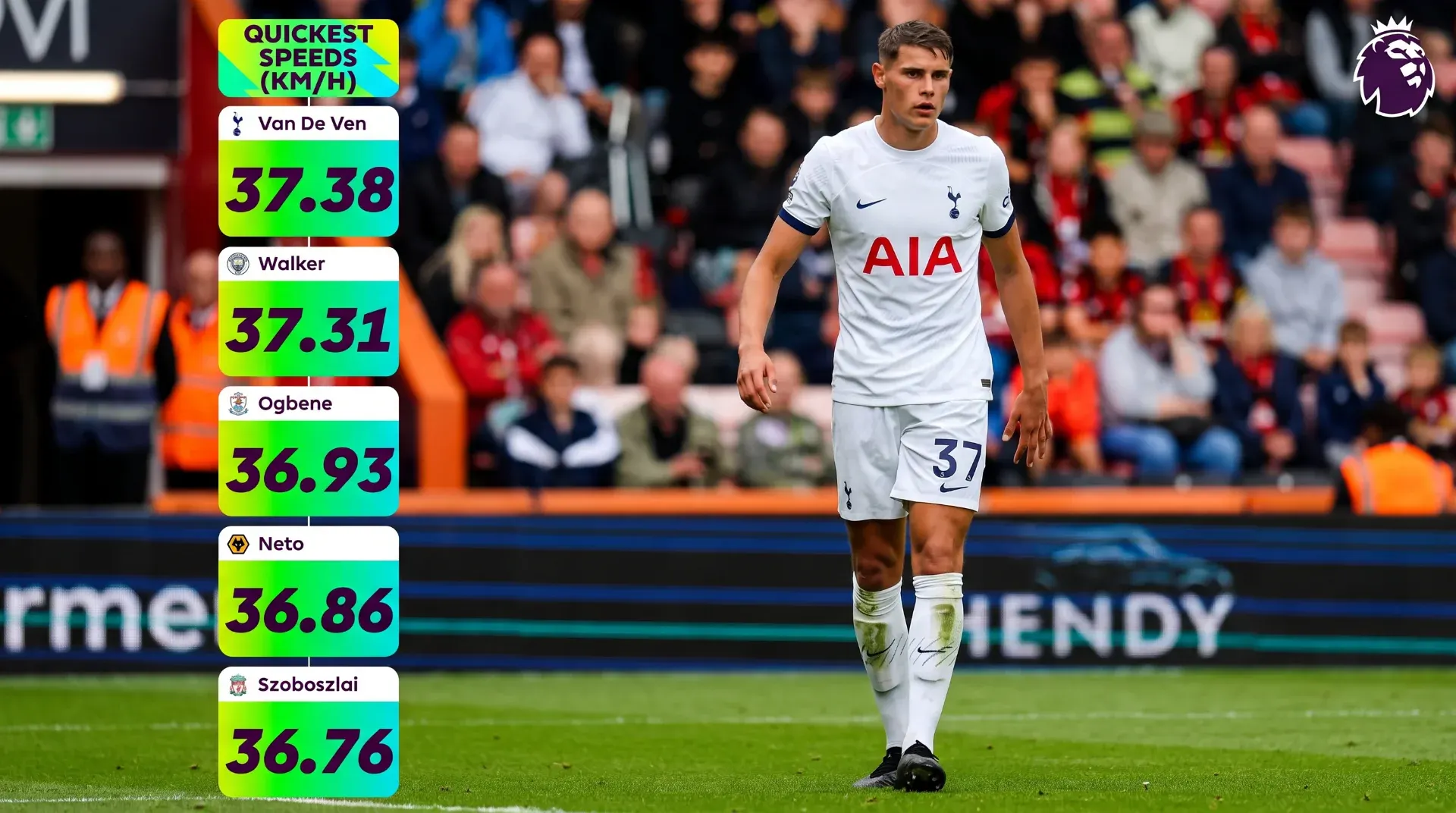
At the top of the spectrum, Tottenham Hotspur's Micky van de Ven continues to defy the laws of physics for a centre-back. He was the only player to break 37 km/h in the 2024-25 season, and his all-time Premier League record — set against Brentford in January 2024 — stands at 37.38 km/h, the fastest recorded since detailed tracking began in 2020-21. This recovery pace has become the cornerstone of Spurs' tactical setup, allowing them to maintain a high defensive line that would be suicidal for almost any other team.
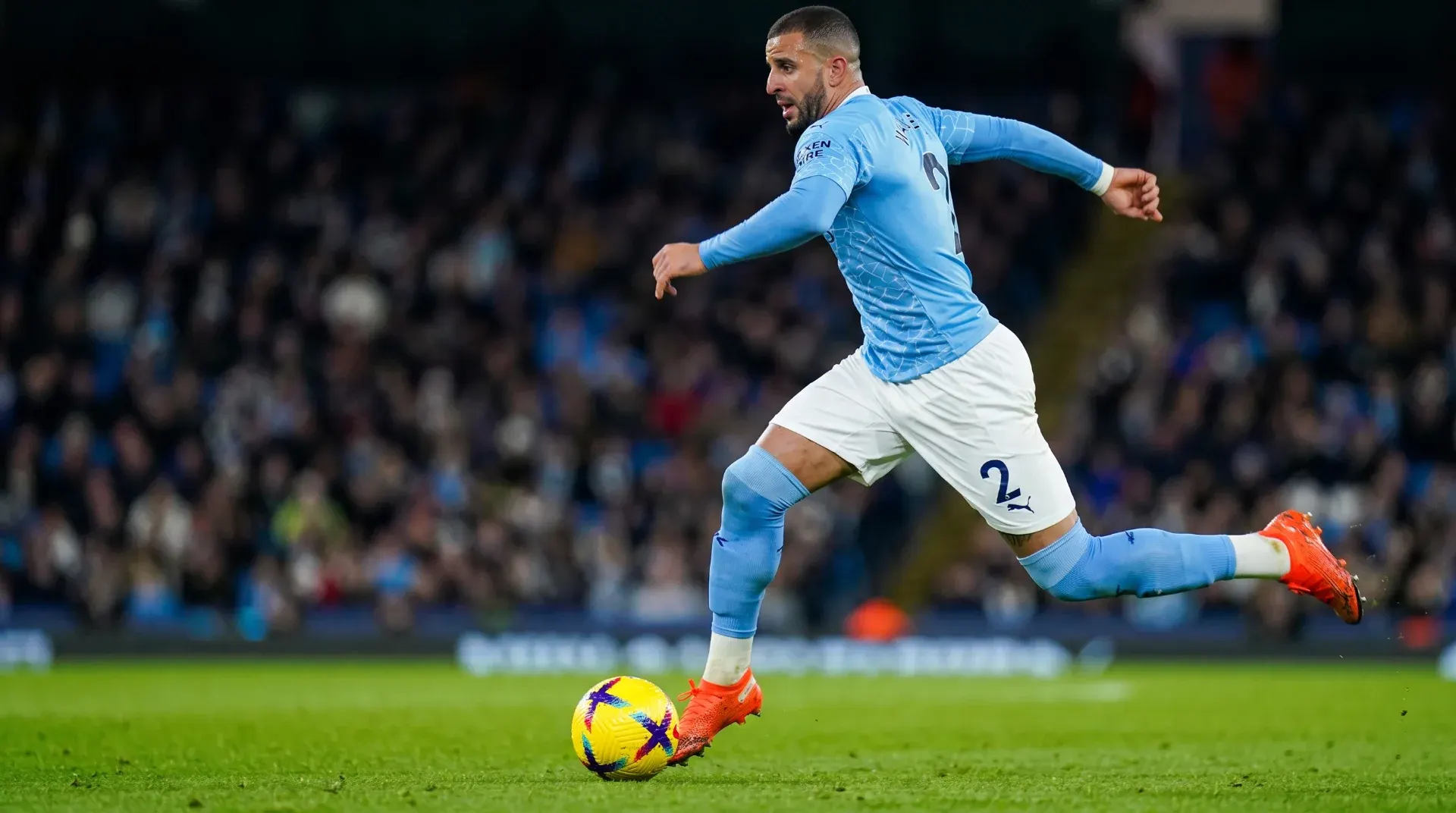
In 2025-26, however, the speed crown has shifted. Wolves' summer signing Jackson Tchatchoua has set the season's fastest mark at 37.30 km/h (against Everton in Matchweek 3, August 2025) — the third-fastest sprint ever recorded in the Premier League, behind only Van de Ven and Kyle Walker (37.31 km/h).
Following closely in the "supersonic" category from 2024-25:
* Matheus Nunes (Man City): 36.7 km/h
* Bryan Mbeumo (Brentford): 36.6 km/h
* Yankuba Minteh (Brighton): 36.4 km/h
* Anthony Elanga (Nottingham Forest): 36.2 km/h

The Bernardo Silva Paradox
The headline that sent shockwaves through social media is the 2024-25 ranking of Bernardo Silva. Despite being the heartbeat of Pep Guardiola's Manchester City, the Portuguese maestro was clocked as the slowest outfield player in the Premier League at 29.4 km/h.
The gap to Van de Ven's seasonal best is roughly 7.7 km/h. In a footrace, the gap would be cavernous. The footballing reality, however, tells a different story. Silva consistently ranks in the top percentile for total distance covered and total time spent jogging — Opta defines this as movement between 6 and 15 km/h, where most of the actual game is played.
It is, in essence, a clean illustration of footballing IQ versus raw athleticism: Silva does not need to outrun opponents because he is already where he needs to be before the sprint even starts.

The "Slow Lane" Leaders
Silva isn't alone in the lower echelons of the speed charts. According to Opta, the bottom five outfielders in 2024-25 were:
* Bernardo Silva (Manchester City) — 29.4 km/h
* Craig Dawson (Wolves)
* Mikel Merino (Arsenal)
* Casemiro (Manchester United)
* Tomáš Souček (West Ham)
Four of the five were 30 or older during the season — pointing to a real correlation between veteran experience and a decline in raw top-end pace, even as their on-ball intelligence often increases.
Notably, Souček spends more time jogging than any other player in the Premier League — he covered 140.1 km in that 6–15 km/h range over 2024-25, with 34.7% of his minutes spent at jogging pace. He rarely hits high speed, but he is on the move more than anyone in the league.
Why Speed Isn't Everything
While the social-media takeaway is Silva's lack of pace, the analytical conclusion is that the Premier League is a league of specialists. You need the "Formula 1" pace of a Van de Ven or a Tchatchoua to stop a counter-attack — but you need the "tactical tortoise" approach of a Bernardo Silva to break down a low block.
For the record, the absolute slowest top speeds belong to goalkeepers. Fulham's Bernd Leno recorded a 2024-25 maximum of just 23.6 km/h — meaning that, by Opta's own definition of a sprint (25+ km/h), he did not sprint a single time across the entire season, despite playing every minute. It's a useful reminder of why goalkeepers stay between the posts.