

It started on TikTok and Instagram — two people, charging at each other at full speed, head against head, ball in hand. Whoever dominates wins. Social media branded it "the world's fiercest collision sport." And now — its first fatal victim.
Ryan Satterthwaite, 19, was in the New Zealand city of Palmerston North, with friends, celebrating a friend's 21st birthday, when he tried out a version of the game. A run, a collision, a serious injury. His life was kept going briefly by a ventilator at the hospital. On Monday night, Ryan died.
What Is Run It Straight
The rule is simple — and that simplicity is its weapon.
A 20-metre long running lane. Two participants run from opposite ends — one carrying a rugby ball, the other acting as the tackler. They collide at full speed. Judges award the win to the one who dominated the impact. No helmet, no gloves, no protection.
The game has its roots mostly in rugby-playing countries — Australia and New Zealand. Many Pacific Islanders associate it with their childhood — a backyard form of "bull rush." But what children once played after Sunday lunch has now become a generator of millions of online views.
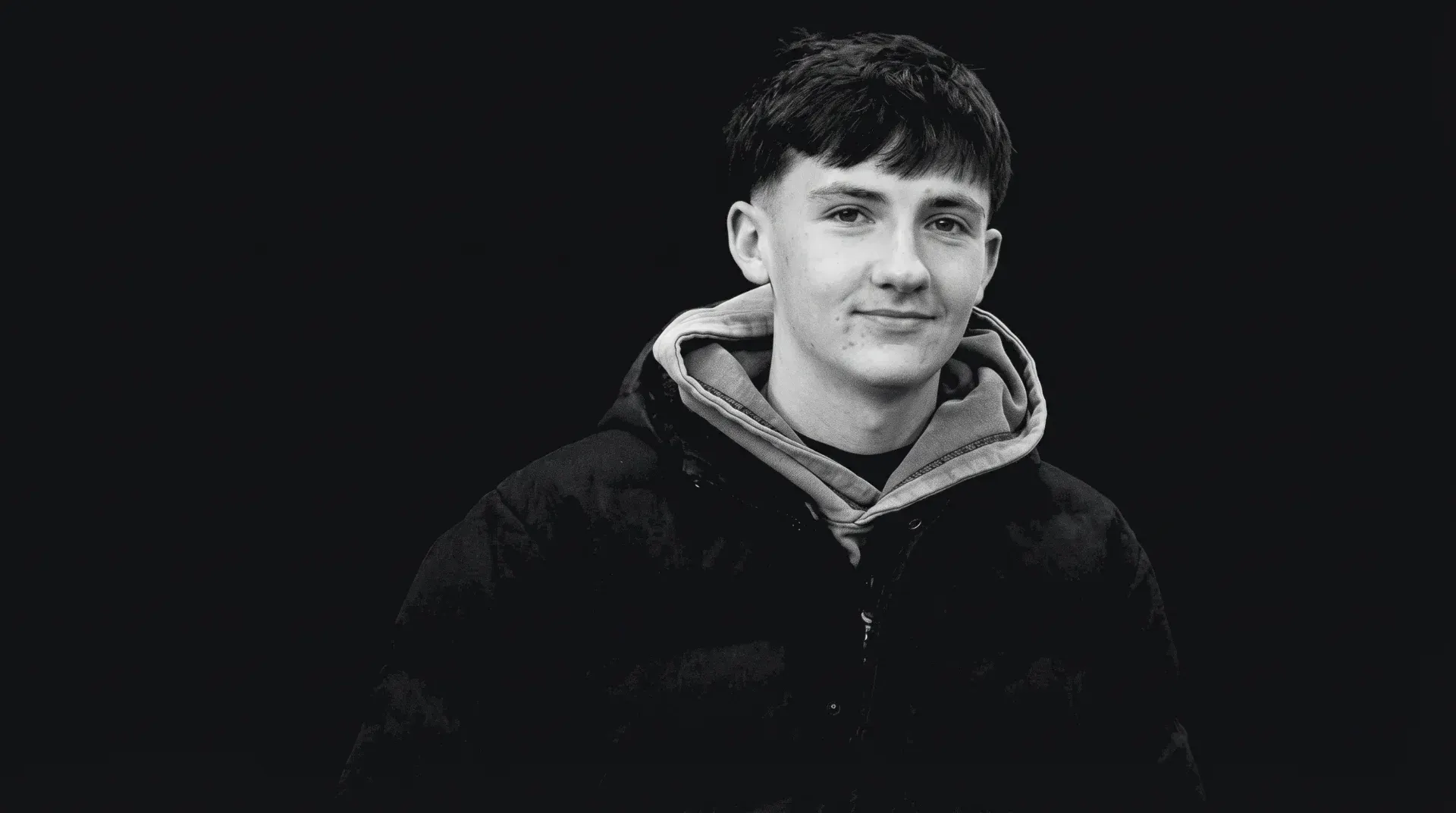
Ryan Satterthwaite's Tragedy
Ryan was not a participant in an official Run It Straight tournament. On Saturday, his group had been celebrating a friend's 21st birthday. On Sunday afternoon, they decided to try out a backyard version of the game.
Ryan's uncle, Peter Satterthwaite, later told the NZ Herald: "They knew about the game. Thought it'd be good fun to play. It was just a freak accident and he hit his head."
Inspector Ross Grantham, Manawatū police area commander, confirmed that it was "an impromptu game among friends, not a planned event" — but added that the tragic outcome "does highlight the inherent safety concerns with such an activity."
"A young man lost his life as a result of participating in what I understand to be a social media frenzy," Grantham said. "While this is not a criminal matter, police will continue to undertake inquiries on behalf of the coroner."
At first, Ryan was conscious. He was talking to his friends. Then his condition rapidly deteriorated. While waiting for the ambulance, the group became so worried that they took him to Palmerston North Hospital themselves. There, he underwent emergency surgery. The bleeding in his brain could not be stopped. And on Monday night — the end.
Ryan worked at Mainfreight Transport. He had finished school at Palmerston North Boys' High School in 2022, where he played basketball and touch. He loved rugby.
"He would do anything for anybody," his uncle said. "He was a top kid."
David Bovey, rector of Palmerston North Boys' High School, said he had been planning to warn his students about the game before he even heard about Ryan's death.
"It was only a matter of time before a tragedy happened. Teenagers aren't good at assessing risk and consequences. He was just having fun with his friends. It is an absolute tragedy."

The Medical Alarm
Ryan's case came as no surprise to neurologists.
Auckland University of Technology professor Patria Hume said even before the tragedy that a Run It Straight collision carries more than five times the force of a rugby tackle. Five times. And that in a sport where head injuries are already an international concern.
"Ryan's death was preventable," Hume told CNN. "It was a backyard copycat of the Runit events which have been designed for social media impact. Runit lacks the structure, safety protocols, and purpose of traditional sports. While rugby, boxing, and MMA are inherently physical, they are governed by rules designed to minimise harm and protect athletes."
Dr Helen Murray, neuroscientist and CTE researcher at the University of Auckland's Centre for Brain Research, told the NZ Herald that "there is clearly a high risk of head injury in this event. From a CTE standpoint, we know that exposure to repeated head acceleration events is the biggest risk factor for CTE pathology."
She explained the mechanism in plain terms: "Our brain is essentially floating in cerebrospinal fluid inside our skull. It's sort of like an egg in an eggshell — if you shake it, you damage what's inside."
Stacey Mowbray, CEO of brain injury organisation Headway, put it in even plainer language: "It is not a sport. It is just reckless, glorified violence."
What makes this particularly dangerous is the so-called "second impact syndrome." When a participant returns immediately after one minor head injury and collides again, the brain does not get the time to recover from the micro-trauma. The result can be fatal.
A single event at Auckland's Trusts Arena underlines the risk. At a Run It Straight trial held there last week, three of the eight competitors were forced to retire — two showing concussion symptoms. One participant on the first night of trials lost consciousness and appeared to suffer a seizure. That is one event. Eight people. Three injured.
Money, Money, Money
And yet, the money keeps coming.
The RUNIT Championship League — an Australian-based organisation — launched in February 2025. Its launch video featured Nelson Asofa-Solomona, a Melbourne Storm and New Zealand rugby league veteran. "Can you run it?" he asked, before laying out RUNIT's plan — to "separate the strong from the stronger" by recruiting "anyone who's got what it takes to dominate contact."
Other rugby and MMA stars joined in as the public face of RUNIT: Manu Vatuvei, George Burgess, Chanel Harris-Tavita (current Warriors halfback), Nemani Nadolo, Carlos Ulberg of the UFC.
Then came the events. Melbourne — in April, with $20,000 Australian dollars (~$13,000 USD) on offer. Auckland — Trusts Arena, the trials. A grand final was scheduled for June — with a prize fund of $200,000 New Zealand dollars (~$118,800 USD).
On Instagram, RUNIT has 170,000 followers. On TikTok — 73,000. Videos have racked up millions of views. Other similar organisations have appeared alongside it — including Run It Straight 24, which runs grassroots competitions. The business model is clear: viral on social media, live events, prize pools, broadcast rights.
UFC's Dana White is reportedly worth $500 million. The organisers behind RUNIT know that may be their goal.
Ryan's uncle put one specific question on the table: "In that game... the ultimate aim is to hurt your opponent, run over the top of him, leading with your shoulder, leading with your head. What did the organisers think was going to happen?"

The Sporting World Responds
New Zealand Rugby issued a clear statement: "We urge people not to take part in Run It Straight games or competitions as they carry significant risk of serious injury. Those wanting to play contact sports should register for a school or club team and learn in a controlled and safe environment how to tackle safely and the art of evasion."
A number of New Zealand schools banned the game from school grounds. A local board in Auckland banned it from public parks in its district. New Zealand's sport minister Mark Mitchell said he had sought advice on what measures the government could take to crack down on what he labelled "unregulated activities that pose a significant level of risk."
Lynette Adams, interim CEO of the Trusts Arena, announced that no further RUNIT events would be permitted at the venue: "Safety of all participants at our venue is paramount and we therefore made the decision not to allow any future Runit events to take place at The Trusts Arena." The scheduled grand final was cancelled.
A RUNIT Championship League spokesperson responded: "Any contact sport like boxing, martial arts or combat-style activities should only be held in highly-controlled environments which include professional medical supervision and support. All RUNIT events follow established protocols including screening of participants for suitability, strict guidelines around where and how to tackle (between the shoulders and hips only), with qualified medical support and medical assessments conducted both during and after competition. We do not encourage any copying of the sport as it should only be done under the strict conditions outlined above in sanctioned RUNIT events."
Ryan's family does not accept that answer. Neither do sports and brain injury experts.
"They're not going to listen to us — we're just Joe Bloggs," uncle Peter Satterthwaite said. "But the public idolises our sportspeople. The All Blacks. The Warriors. They're the ones who need to stand up and say, 'Don't do this.'"
Ryan's family is calling on prominent rugby figures to publicly condemn Run It Straight. A signal that their voice has been heard would be worth a great deal — before another victim emerges.
Ryan's uncle summed up what many are thinking: "A little bit of fun has lifelong consequences. Just don't do it."