


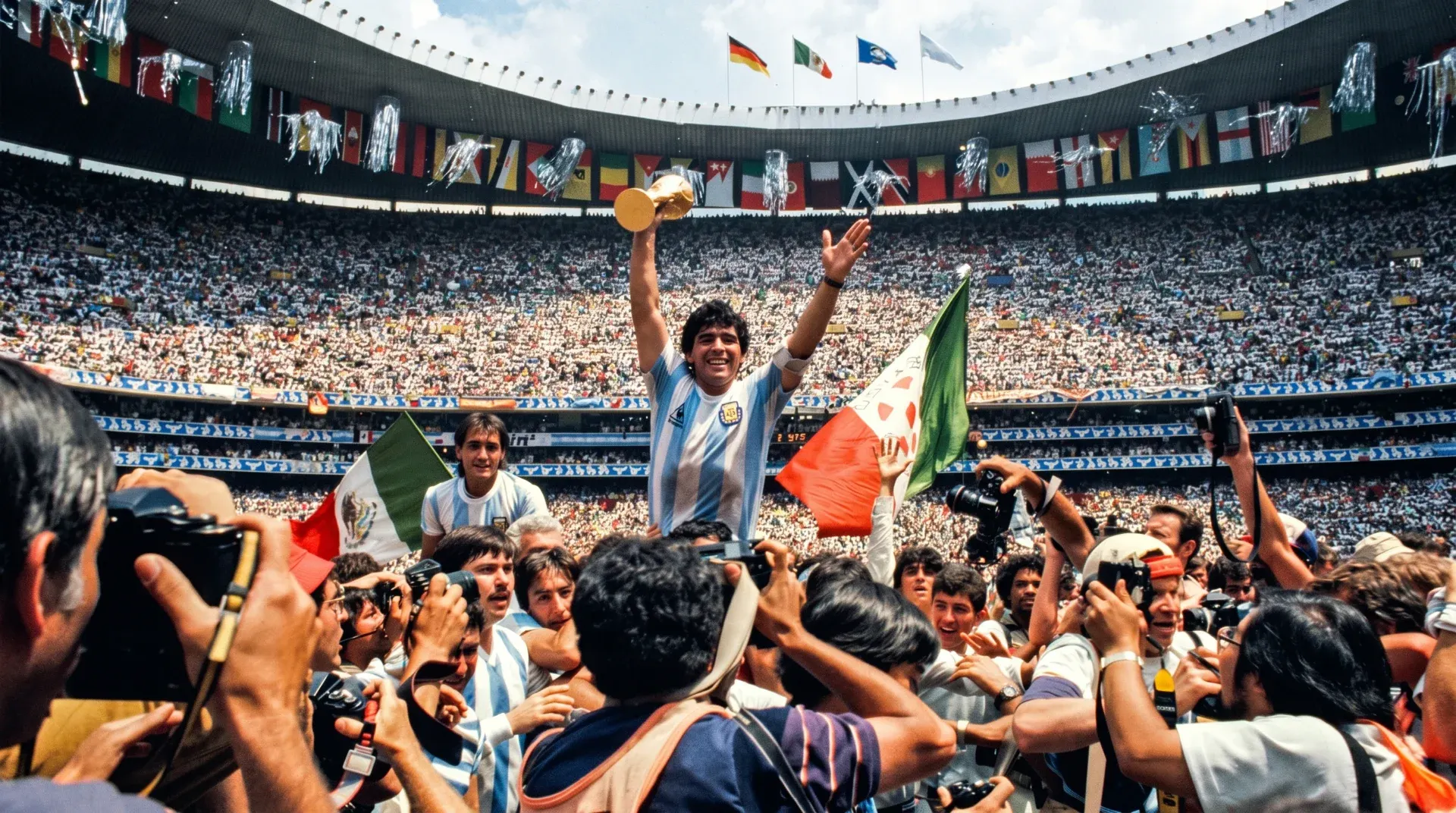
Pelé's Verdict
Football history rarely throws up a comparison capable of stirring the kind of passion that a single sentence once ignited. "How can you compare a man who plays well with his head, who strikes with both his left and his right, to someone who uses only one foot, has only one trick and is powerless in the air?" With those words, Pelé cast doubt on Lionel Messi's supremacy and named Diego Maradona the finer player.
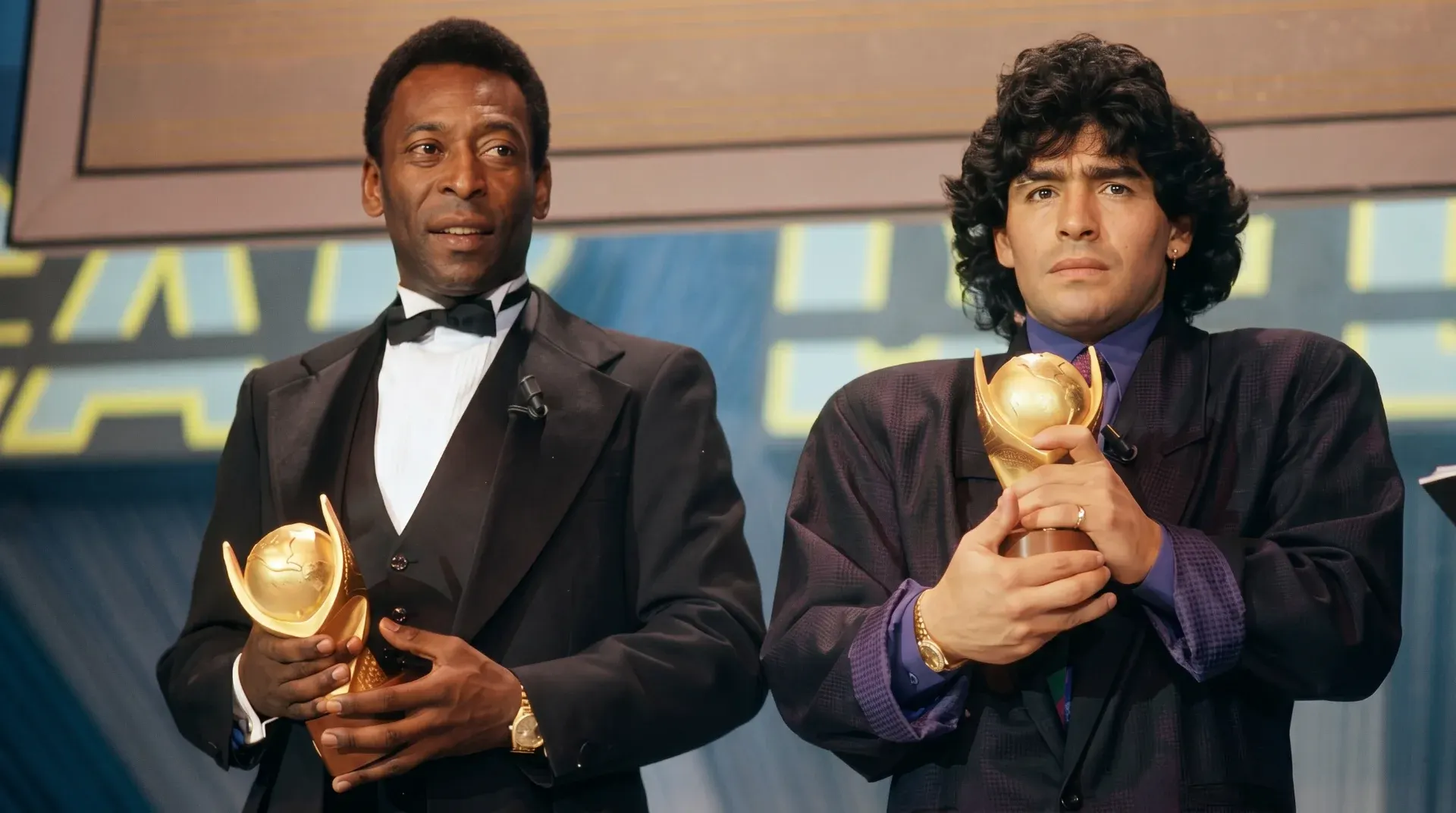
The verdict is, of course, subjective. Messi's name sits beside a long list of records, titles and individual honours. Pelé's argument was about something else: the sheer variety of Diego's on-pitch arsenal. Michel Platini once captured the point neatly, saying that what Zinedine Zidane could do with a football, Maradona could do with an orange.
Messi himself has always stayed humble in this debate. "Even if I played for a million years, I would never come close to Maradona," he has insisted. The argument may never truly be settled. Yet part of the answer is held in one specific time and place — Mexico, the summer of 1986, where a single man turned an entire World Cup into his personal showcase.
The Mexico Summer
For the 25-year-old Maradona, the Mexico World Cup became the absolute peak of his career. He scored five goals and laid on five more. Ten of Argentina's fourteen goals were down to him directly, either struck or created, accounting for 71 percent of the team's output. To this day he remains the only player to register five goals and five assists at a single World Cup.
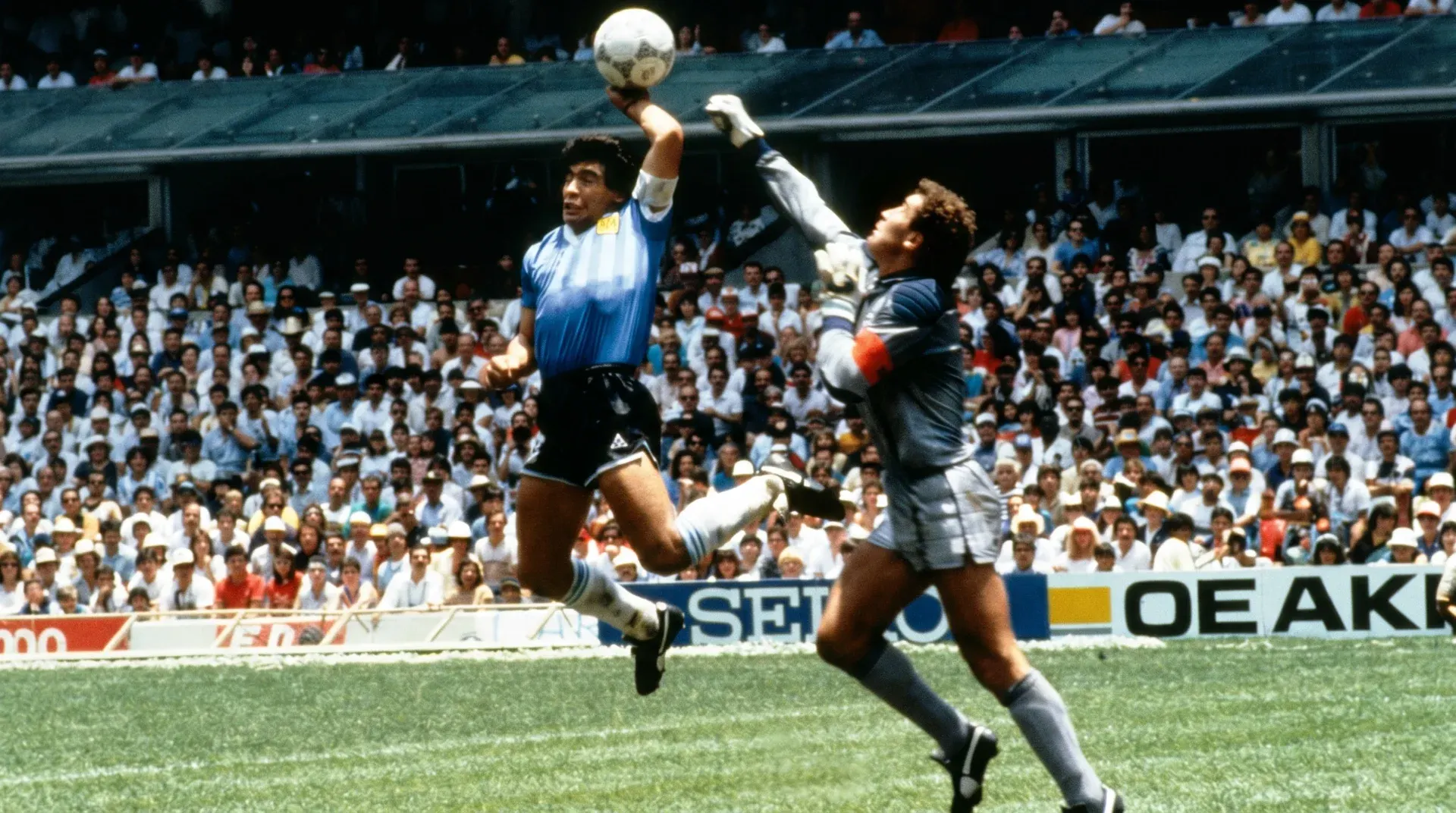
Against South Korea, Diego had a hand in all three goals. Against Italy he tamed a fiendishly difficult high ball and scored one of the tournament's finest strikes. Yet the real drama was waiting in the quarter-final against England.
Two goals in four minutes — history chose to remember them separately. In the 51st minute Maradona punched the ball into the net, an episode that entered football's memory as the "Hand of God." Four minutes later he collected possession in his own half, slalomed past five English players and goalkeeper Peter Shilton, and finished off a goal FIFA would crown the "Goal of the Century" in 2002. France's L'Équipe summed up the number ten precisely: "half angel, half devil."
In the final, against West Germany, Lothar Matthäus shadowed him for the full ninety minutes. And still, in the 84th minute, Maradona found a sliver of space and threaded the decisive, title-winning pass to Jorge Burruchaga. Argentina were world champions.
The Neapolitan Years
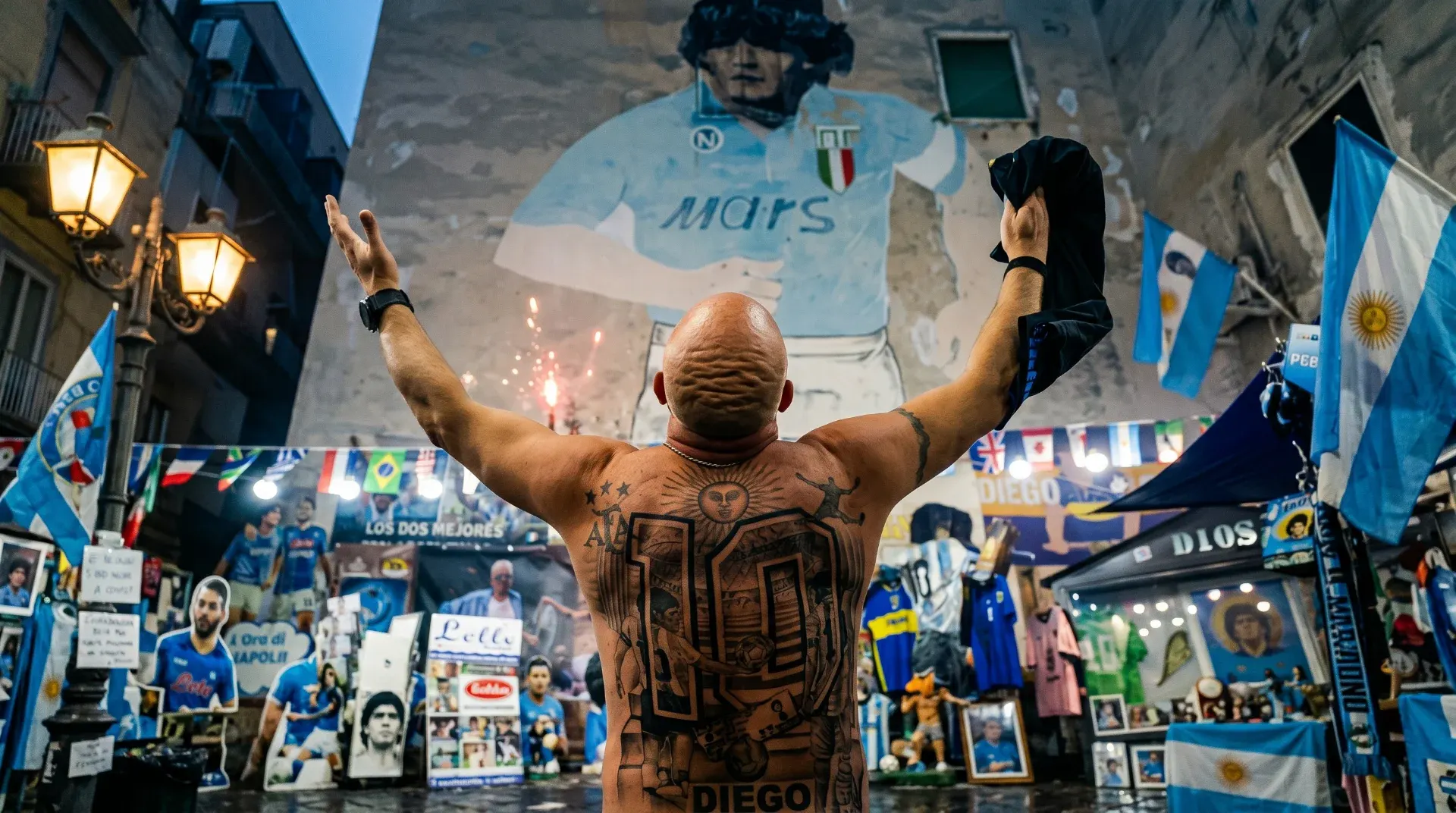
Two years before Mexico, Diego had already headed for Italy. In 1984 he joined Napoli for £6.9 million, a transfer fee that stood as a world record at the time. Italian football was ruled by the wealthy clubs of the north, and Naples languished at the very bottom of that hierarchy. The city embraced the Argentine as a saviour.
The outcome proved historic. Maradona won Napoli two Scudetti, the Serie A title, in 1986-87 and 1989-90, along with the UEFA Cup. His image appeared on the city's walls, newborns were given his name, and to taunt the grandees of the north, locals even staged symbolic "funerals" in the streets.
It was here, too, that the first crack of his decline appeared. A cocaine addiction that had begun back in Barcelona spiralled into a full-blown crisis in Naples, tangled up with ties to the mafia. The cost was brutal — a 15-month ban that brought his Italian era to an end.
Beyond The Pitch
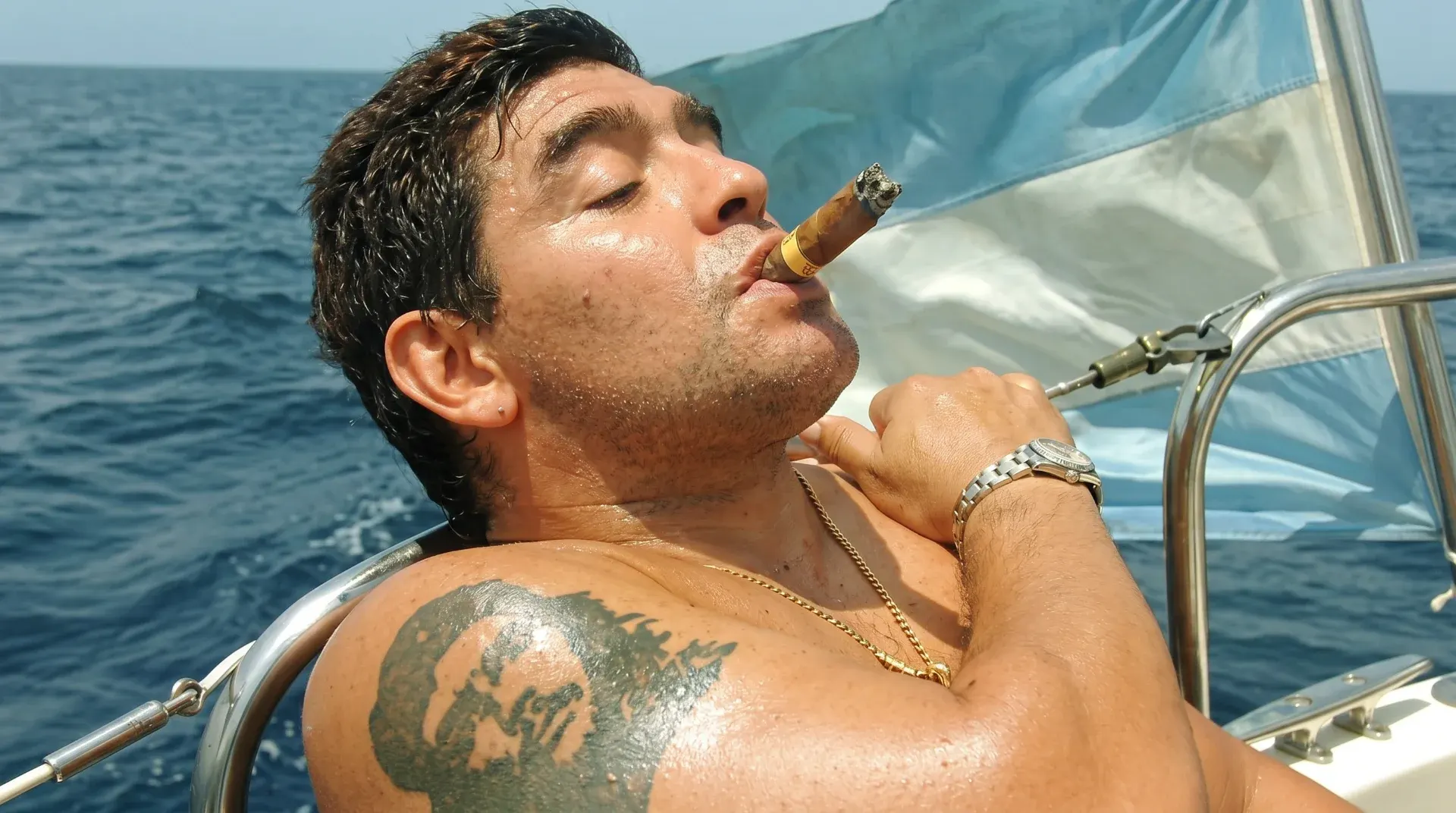
Maradona's life always spilled beyond the touchlines. He was an open leftist, a friend of Fidel Castro and Hugo Chávez, with a tattoo of Che Guevara inked on his body. Politics was never a pose for him; it was part of who he was.
His international story ended in tragedy. At the 1994 World Cup a drugs test revealed ephedrine in his system, and Diego was expelled from the tournament. It was his final World Cup — a conclusion unworthy of the career that preceded it.
And yet, in Argentine eyes, his standing never wavered. In a country that had lived through military dictatorship and social disillusionment, Diego remained a symbol of dignity reclaimed. His flaws were there for all to see, but that was precisely the bridge between the ordinary man and the myth — he was someone in whom millions recognised themselves.
From Villa Fiorito To A Stadium In His Name
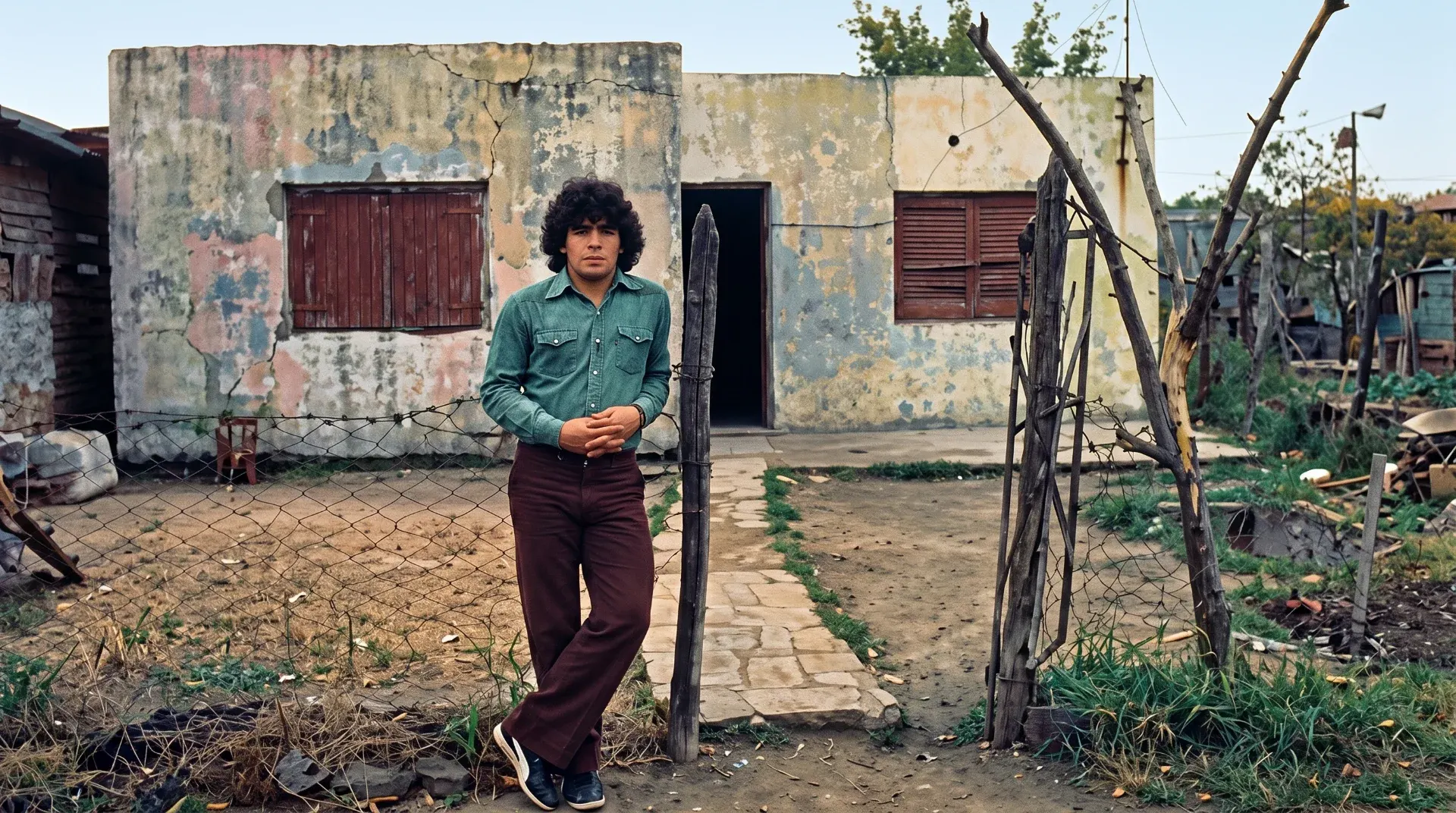
Maradona's story began in Villa Fiorito, a poor district on the edge of Buenos Aires. From there to global myth, he travelled the whole road with nothing but a ball at his feet. "I made a mistake and I paid for it, but the ball is never stained," Diego once said.
Those words are the key to his legacy. A life in which triumph and crisis kept changing places left one thing untouched — what Diego did with a football remained without equal in the history of the game. FIFA named him Player of the 20th Century, a title he shared with Pelé.
Napoli's stadium now carries his name, the Stadio Diego Armando Maradona. It is far more than a tribute; it is an acknowledgement of the bond that formed between a man and a city, between a talent and its people. Forty years on, that summer in Mexico remains the ultimate yardstick, and Diego Armando Maradona one of those rare figures in football whom generation after generation has measured against a god.