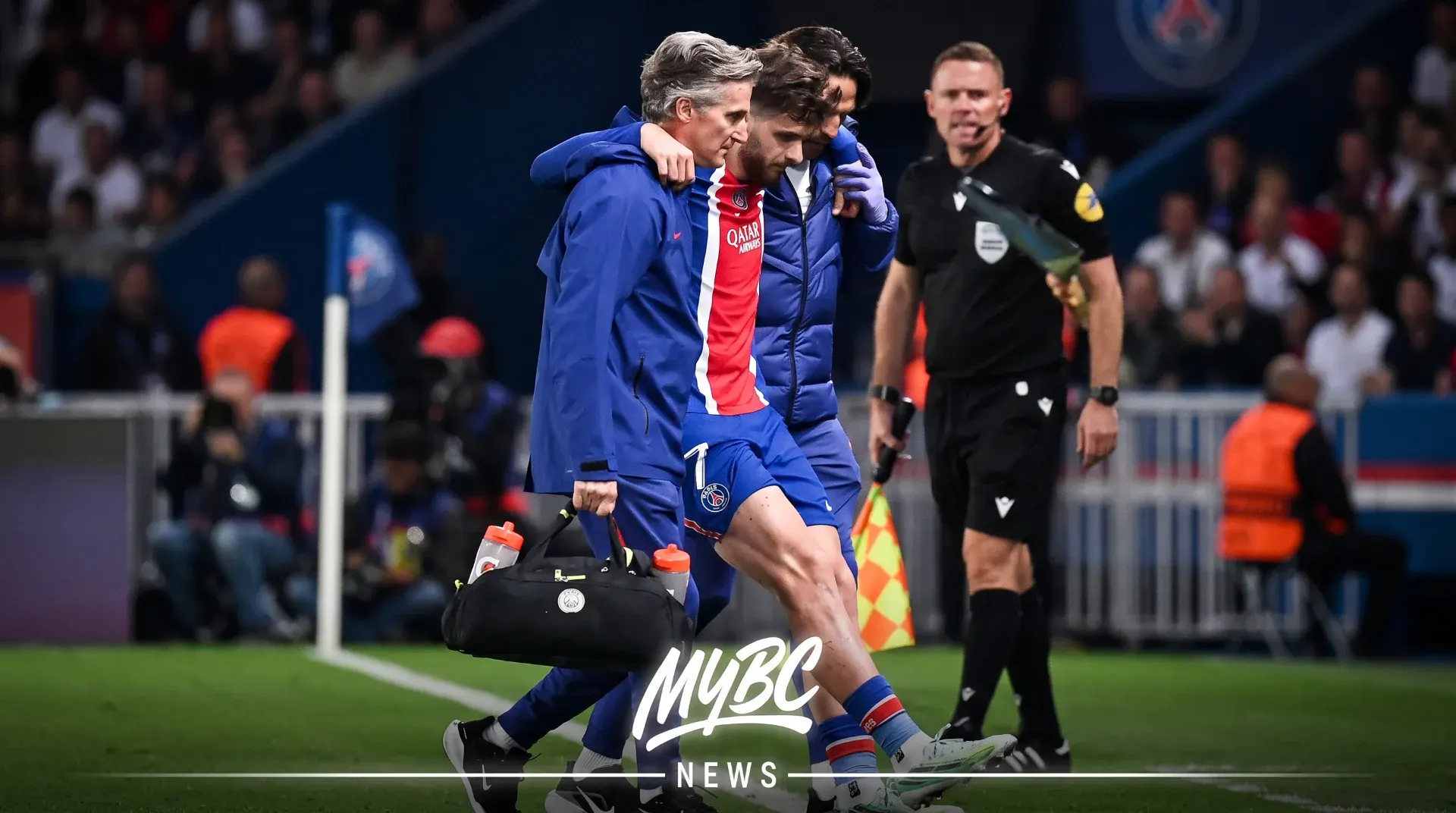



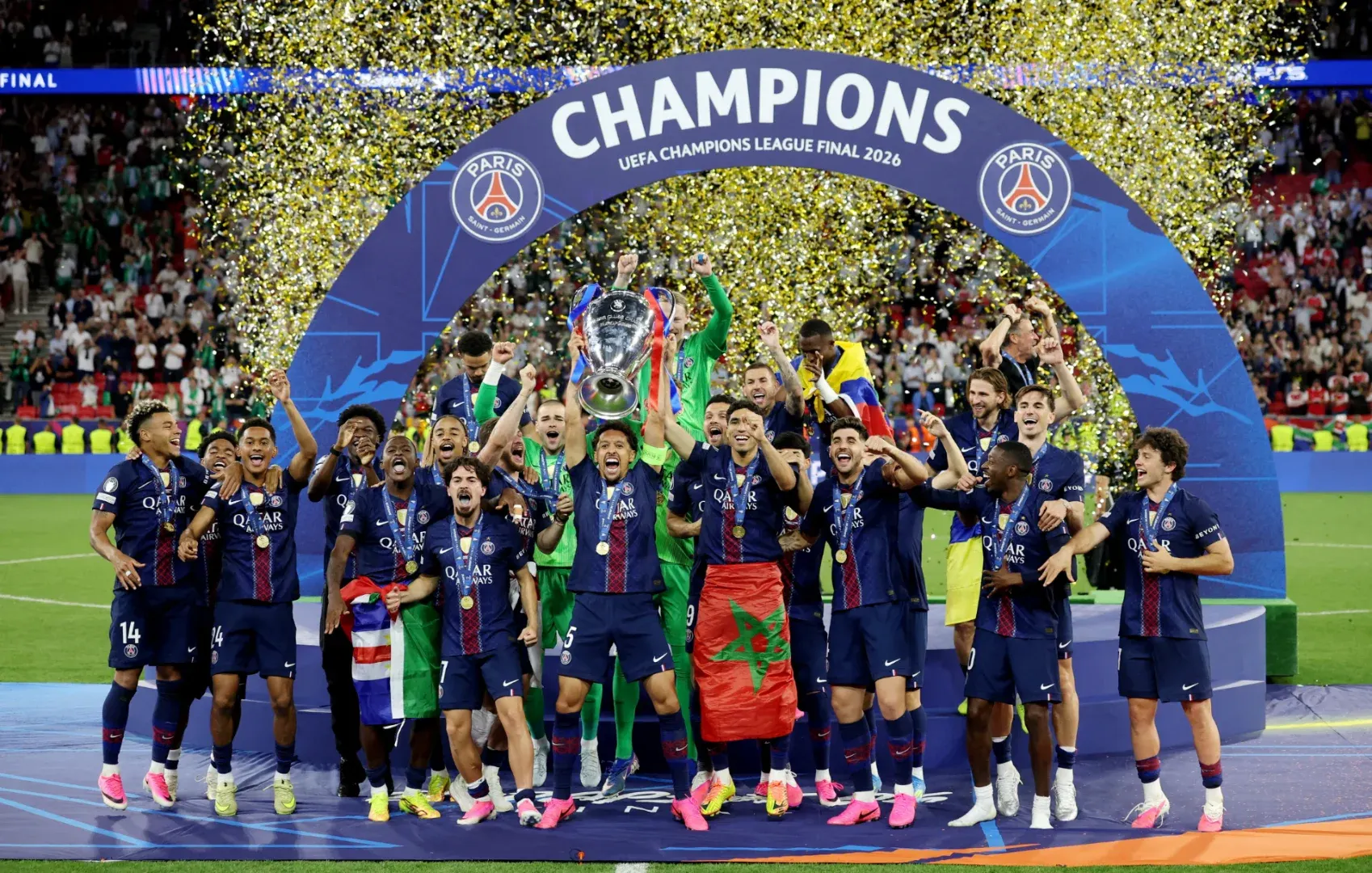
There is an unwritten law in football: winning a title is hard, but holding on to it is almost impossible. Yet on 30 May 2026, at Budapest's Puskás Aréna, Paris Saint-Germain proved that in the modern game "impossible" is nothing more than a temporary barrier.
Not since Real Madrid's hegemony of 2016-18 had anyone managed it. Now PSG are the first club to defend the Champions League crown in back-to-back seasons. The old "eternal underachievers" tag has been officially torn up.
The 120-Minute War
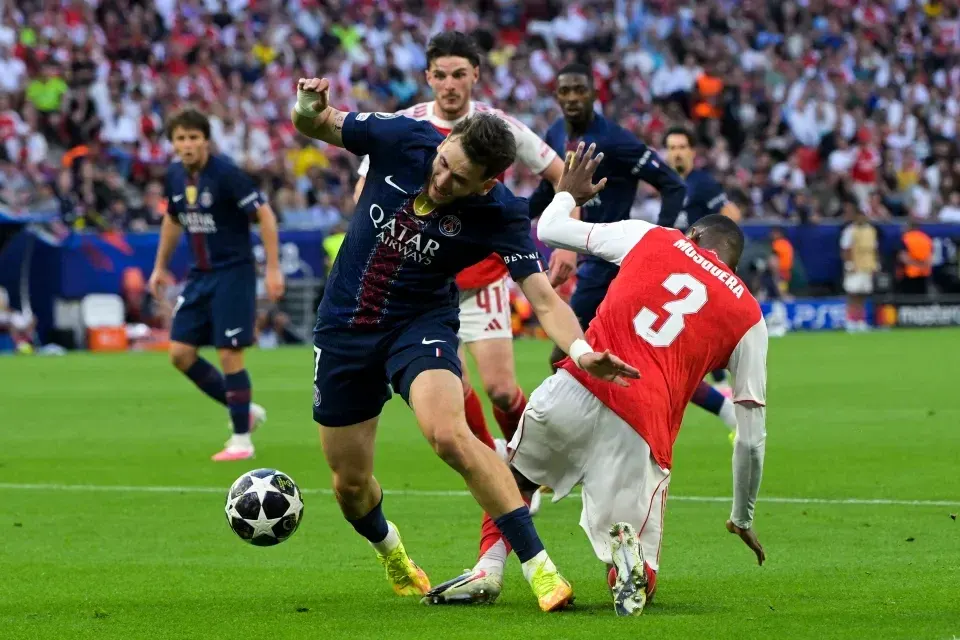
The final against Arsenal turned into a genuine tactical and psychological war. The Londoners could hardly have started better — inside six minutes Kai Havertz, teed up by Leandro Trossard, beat Matvey Safonov to put them ahead.
The Parisians had the ball almost at will, yet Mikel Arteta's iron defence simply would not crack. The turning point came on 65 minutes: Cristian Mosquera caught Khvicha Kvaratskhelia, and Ousmane Dembélé tucked away the penalty without a flicker of nerves. For the first time in a decade, the tie went all the way to spot-kicks. Eberechi Eze and Gabriel Magalhães both missed, Paris held their nerve to win the shootout 4-3, and the back-to-back triumph was theirs.
Kvaratskhelia, The Phenomenon
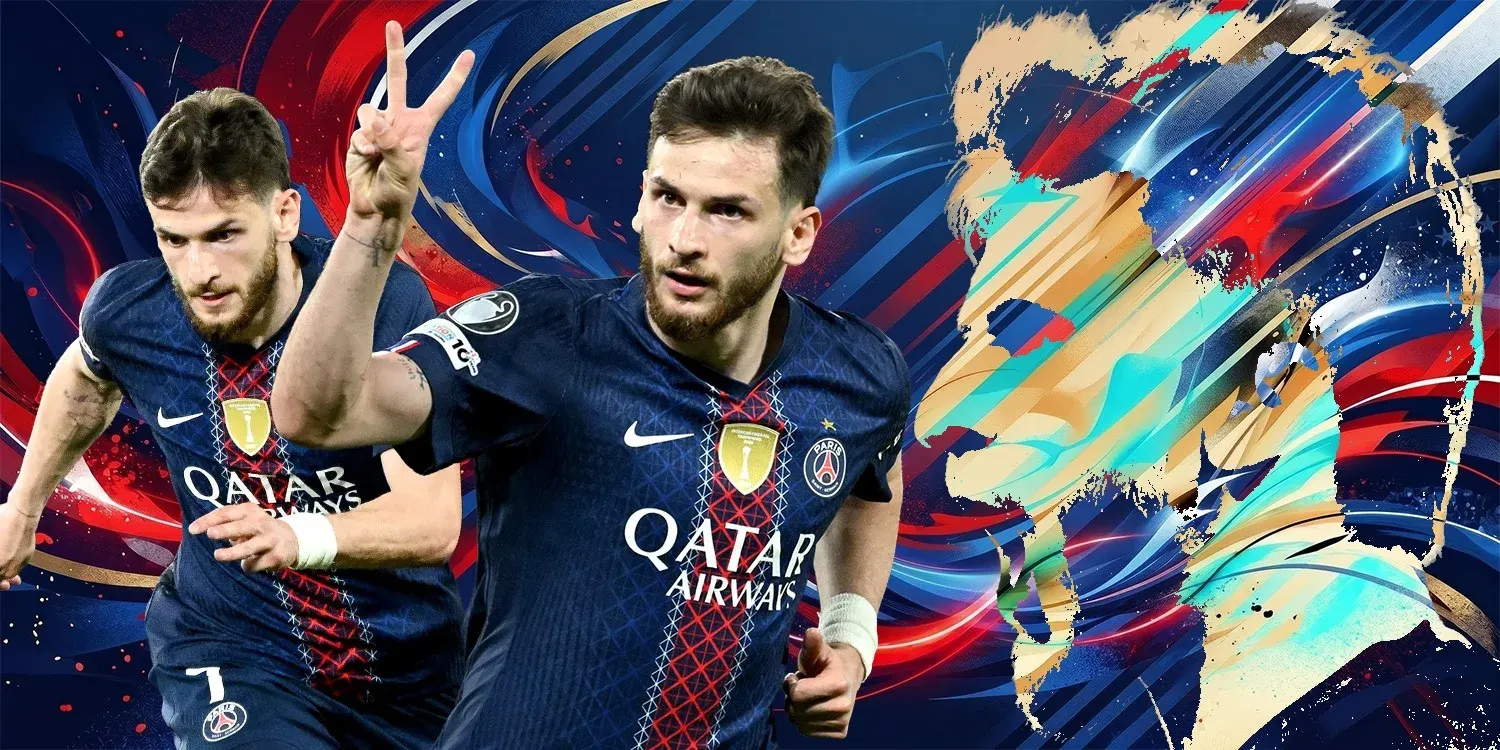
The chief creator of the 2025/26 campaign and the tournament's MVP was, beyond any argument, Khvicha Kvaratskhelia. The Georgia forward posted outrageous numbers among Europe's elite: 16 matches, 10 goals and 6 assists.
His fingerprints were all over the final, but his masterpiece came in the semifinal — a breathless 5-4 win over Bayern Munich in which he scored twice. Tellingly, UEFA's technical group singled out his graft as much as his flair, logging 124.17 kilometres covered across the tournament and a top speed of 33.7 km/h. Kvaratskhelia was the epicentre of everything good Paris did going forward, a footballer whose individual craft stayed an unsolvable riddle for every back line he faced.
Dembélé's Role
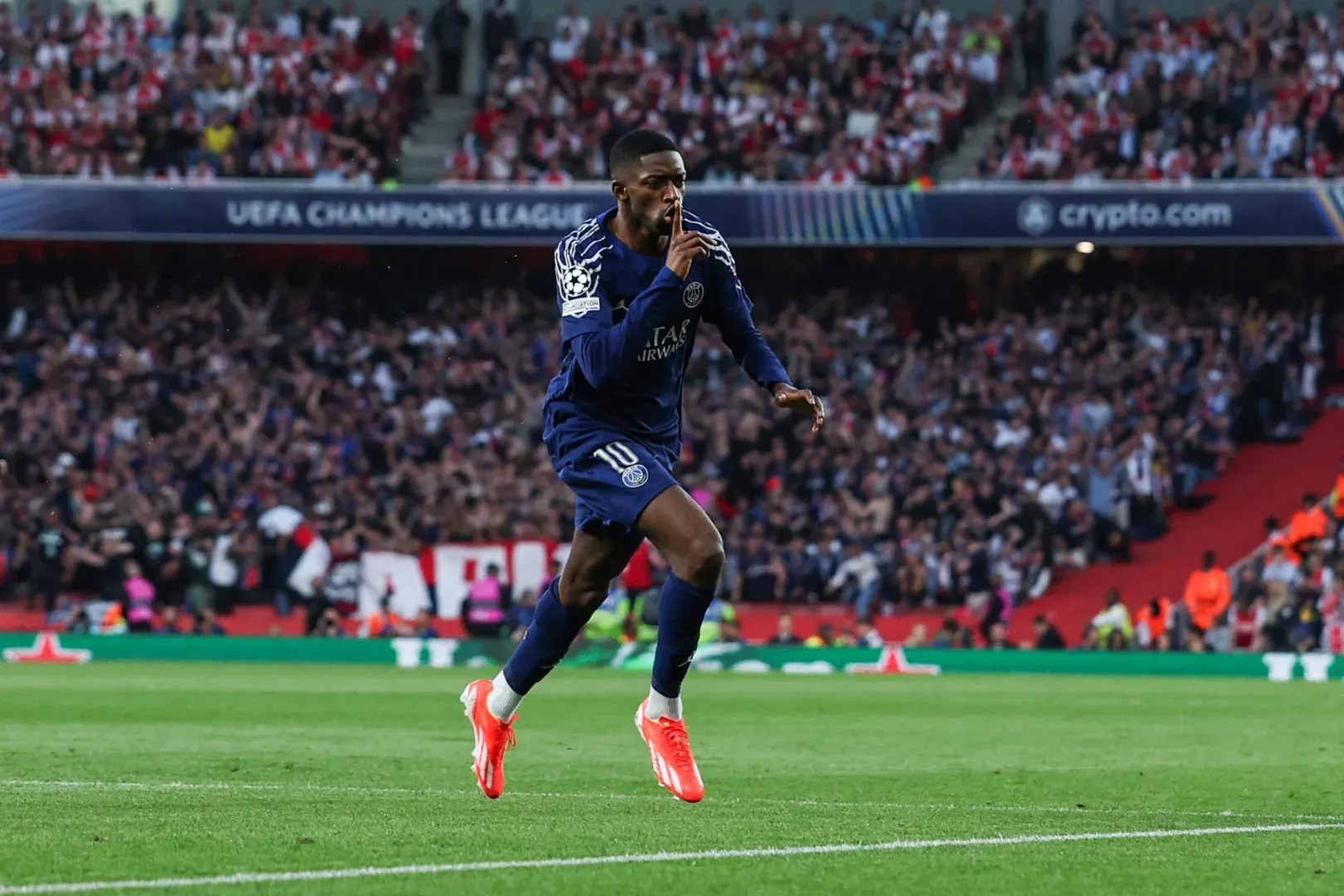
If Kvaratskhelia is the great spark and creator of this season, Ousmane Dembélé is the foundation Enrique's unbeaten project is built on. The France forward walked out in Budapest with a unique billing — the reigning Ballon d'Or holder.
His dominance is no one-off flash. Being named the previous season's best player in the Champions League, plus the lion's share he carried in the Parisians' first triumph, fairly earned him recognition as the world's finest footballer.
Nowhere was that clearer than on 65 minutes. With Arsenal in front and the Parisians squeezed under the most brutal psychological pressure, it was the Frenchman who took the weight on his shoulders. Kvaratskhelia won the penalty, Dembélé stepped up, David Raya dived the wrong way — and that ice-cold finish flipped the entire match on its head.
Dembélé and Kvaratskhelia are now the two great, perfectly interlocking pillars of Enrique's system. Ousmane is no longer merely a gifted winger; he sits at the very top of European football's new hierarchy, a player who proved his Ballon d'Or pedigree and his winner's mentality against the Londoners when it mattered most.
How Enrique Transformed PSG
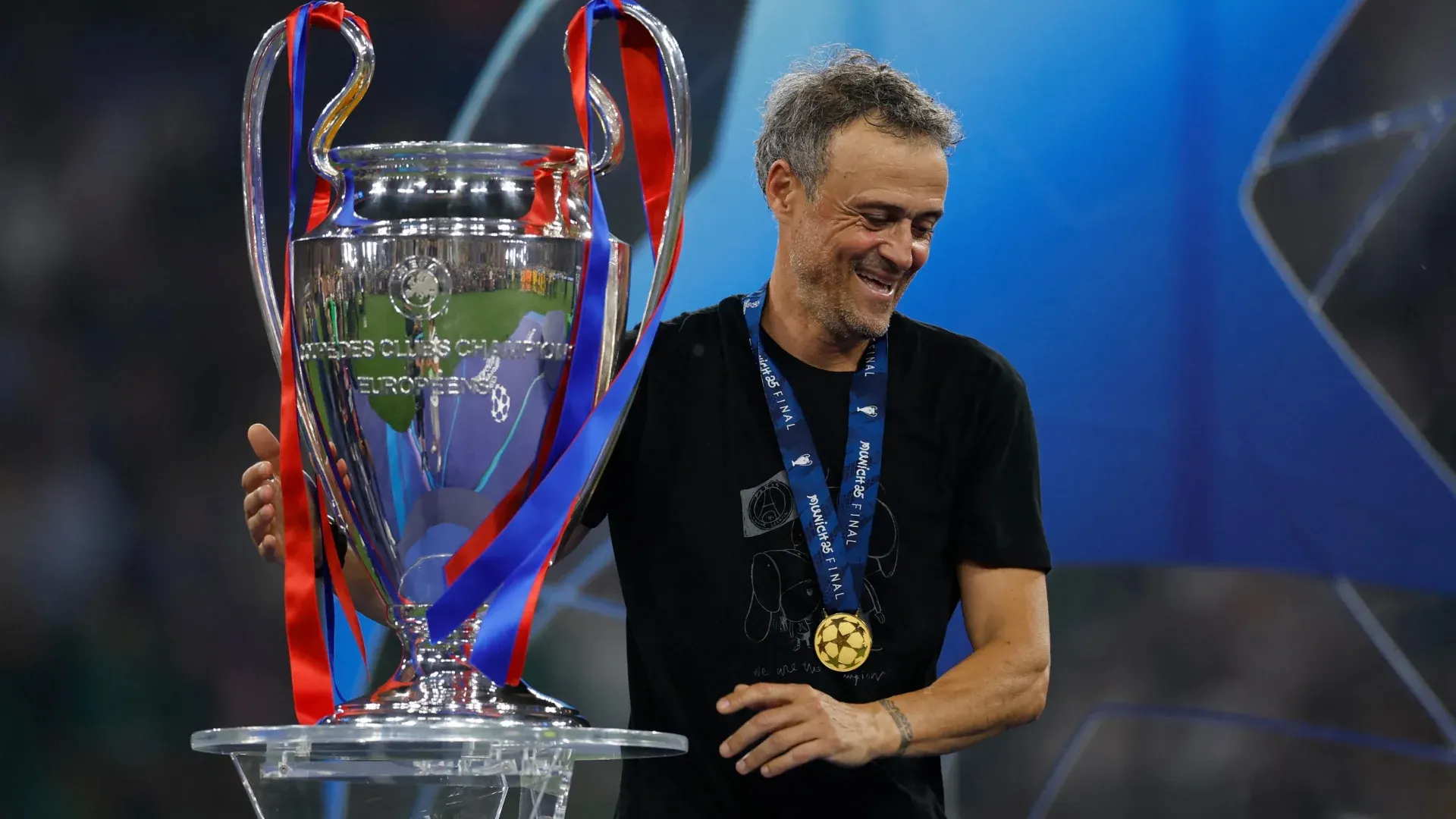
Luis Enrique is "the world's best manager," Nasser Al-Khelaïfi declared — and the numbers do the rest of the talking. This is a third Champions League for the Spaniard, one with Barcelona and now two in Paris.
His biggest win, though, had less to do with tactics than with the dressing room. As Steven Gerrard pointed out, Enrique stripped out the egos and cut loose the players who were poisoning the mood, then forged a single, fighting unit that bends to whatever a match demands. The scale of the project's grip on the season is underlined elsewhere too: Paris also swept up the French Cup, the Super Cup and the Intercontinental Cup.
European Football Has A New Ruler
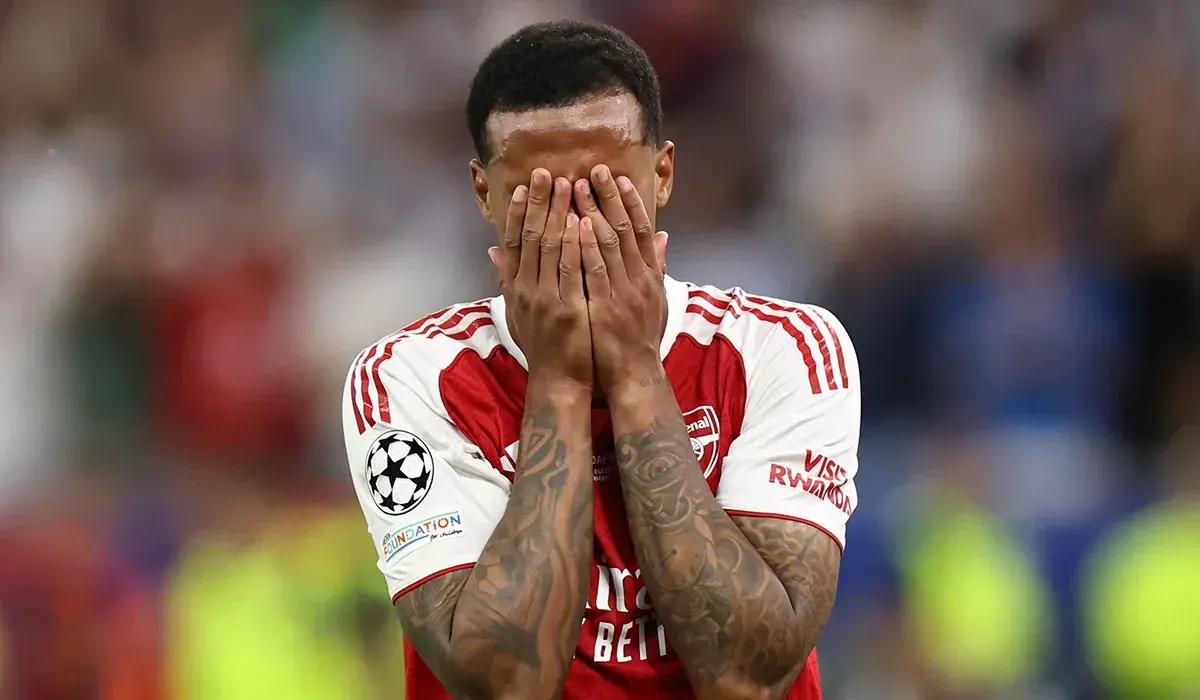
Defeat or not, Arsenal's performance in Budapest will go down as one of the finest defensive displays in the history of Champions League finals. Arteta choked off the Parisian attack about as well as any side could, yet the lottery of penalties proved fatal. "This defeat won't finish us," Declan Rice insisted afterwards, but the fact is stubborn — Arsenal's wait for Europe's biggest prize now stretches to 266 matches.
At the end of a gruelling 63-match season, the continent has woken up to a new reality. Where PSG were once a capricious collection of bought-in galácticos, they are now an unbeaten machine, bound together by the perfect symbiosis of Luis Enrique's tactics, Kvaratskhelia's magic and Dembélé's championship class.
Ultimately, only one question is left hanging: who on earth stops this system next season?